
The answer is easy, really.
The digital keyboard.
But I’m getting ahead of myself.
I used to write out everything in cursive. My bluebook essay tests at community college. The stories I’d file at the San Diego weekly newspaper—my first journalism job after college. The early love letters I wrote to Karen. The draft speeches I wrote for the CEO in my corporate career.
In fact, for the longest time, I couldn’t think straight unless I took pen to paper. Then along came the keyboard and the cathode ray tube—the clunky forerunner of today’s desktop computer. Now I can barely write my name legibly. My chicken-scratch rivals Donald Trump’s unreadable signature.
Well…maybe not that bad.
Seems like cursive is a lost skill in our culture.
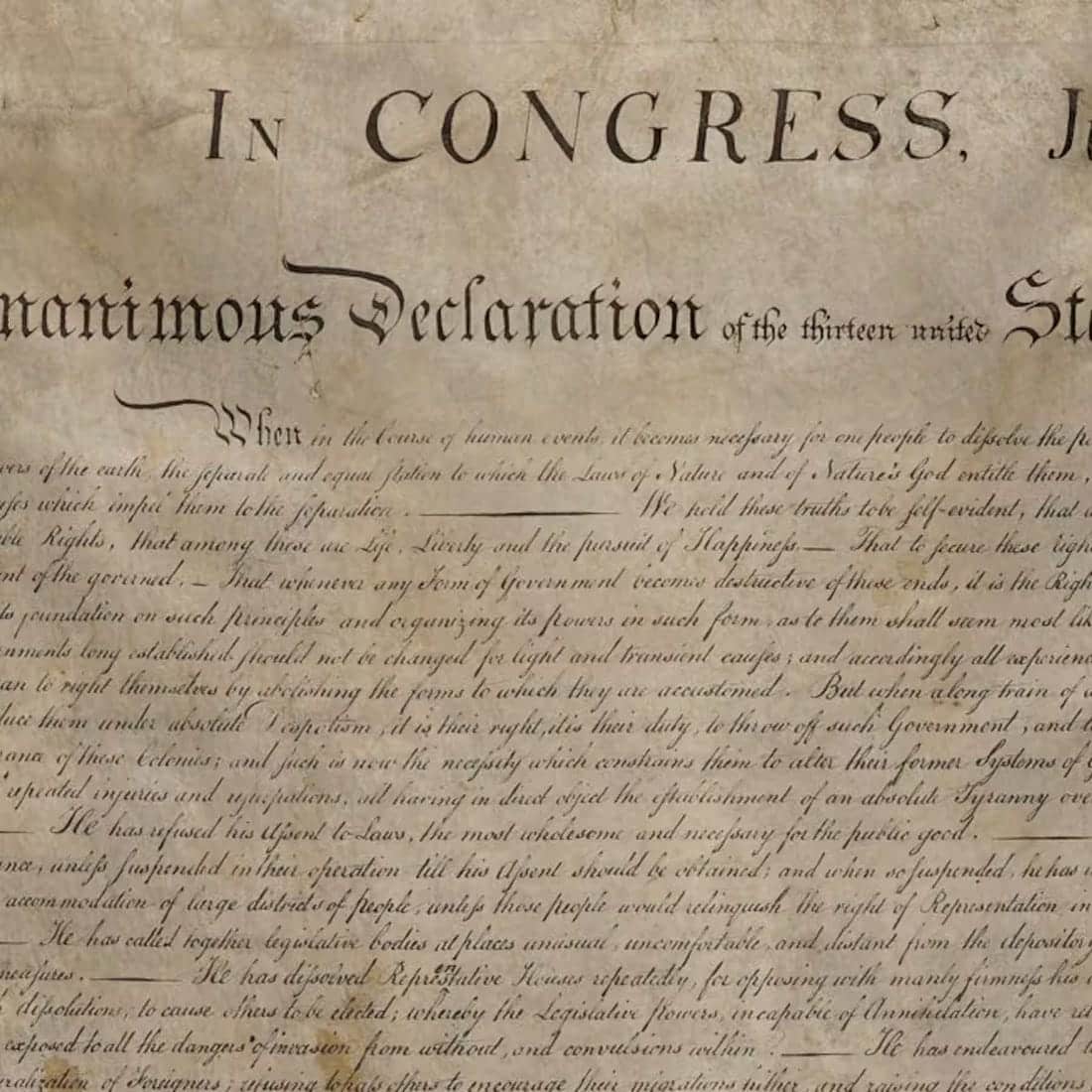
Imagine if the Founding Fathers had presented a typed version of the Declaration of Independence to us—with all the names typed below. Something would’ve been lost in the historical significance of it all.
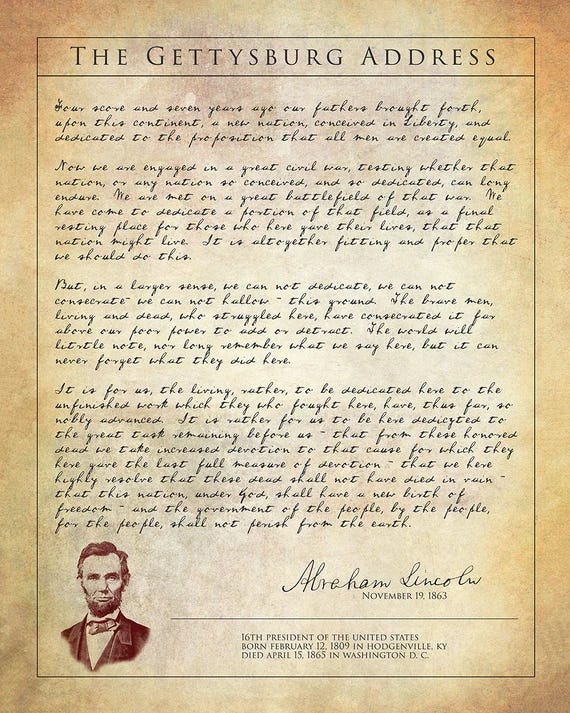
Likewise, to truly grasp the scope of Lincoln’s Gettysburg Address, you have to read it in the President’s own writing.
Thankfully, Lincoln left us five handwritten manuscript copies of the address. There are a couple of copies with his cross-outs. That’s even better. The Nicolay Copy—generally considered the earliest surviving draft—was written on two different kinds of paper, suggesting he may have revised or completed part of it while in Gettysburg.
Even Abraham Lincoln didn’t get every sentence right the first time.
Sadly, it’s reported that many GenZers struggle to read cursive, let alone to write it. So they can’t read our original founding documents or other writings like the Gettysburg Address that tell our country’s history.
And they might as well toss Aunt Sharon’s handwritten recipes in the kitchen trash too. So sad, because a little bit of Sharon lives on in every one of those stained recipe cards.
For years, my wife Karen, a retired elementary school teacher, taught D’Nealian writing. It was a slanted handwriting system created in the 1970s to make the transition from print to cursive easier for kids. The system stuck: it’s how she writes to this day.
But she had to stop teaching cursive four years before she retired. Here’s why:
- In 2010, the national Common Core Standards left out cursive to focus on keyboarding and digital literacy.
- Time Limits: Teachers had less school day time, so they chose skills deemed more useful for modern jobs.
- Digital Shift: Laptops, tablets, and phones replaced paper notebooks in most everyday tasks.
I know, I know. The keyboard revolutionized our ability to communicate quickly and efficiently. In fact, I can’t write with a pen and paper anymore. These days my ideas are driven from my brain to my fingertips to the keyboard. And editing can be done on the fly.
But I can’t help but think something personal has been lost.
Handwriting is a little like a fingerprint. No two people write exactly alike. A typed page tells us what someone said. A handwritten page tells us something about the person who said it.
We have a few friends who still send handwritten notes of appreciation that mean so much more than a text or email. It’s like they’re right beside us, speaking the words.
Maybe progress always asks us to leave something behind. But I wonder if, in trading pens for keyboards, we’ve lost more than a skill. Have we lost a small piece of ourselves?
To close on a positive note, cursive is making a comeback of sorts. More than half of U.S. states now require or explicitly encourage cursive instruction in public schools, typically in grades 2–5.
We’ll see if the trend sticks.


Leave A Comment