
The Shroud of Turin?
Alright…I can already hear all you scoffers and naysayers. Hang with me, here. You might find this interesting.
First things first. There’s no doubt about the historical Jesus. He came, he preached and healed, and he died.
We have enough independent accounts outside the Christian canon to verify his ministry. Consider:
-
Flavius Josephus (c. 37–100 AD)
-
Antiquities of the Jews (Book 18, Chapter 3): Mentions “Jesus, a wise man…who was crucified by Pilate under Tiberius.” His Testimonium Flavianum (about Jesus) is debated—some scholars think parts were later Christian additions—but the core reference is widely accepted.
-
-
Talmud (Jewish Rabbinic Texts, compiled c. 3rd–6th century)
-
Mentions “Yeshu” and events interpreted as Jesus’s execution, sometimes in a polemical context.
-
-
Tacitus (c. 56–120 AD)
-
Annals (15.44) mentions “Christus” executed by Pontius Pilate during the reign of Tiberius and the persecution of Christians by Nero.
-
-
Suetonius (c. 69–122 AD)
-
The Lives of the Caesars mentions disturbances in Rome caused by “Chrestus,” likely referring to Christ or early Christians.
-
-
Pliny the Younger (c. 61–113 AD)
-
Letter to Emperor Trajan describes early Christian worship, including Christ as a divine figure.
-
There’s more! But that’ll do.
What happened afterwards is the crux of the matter—a matter of faith to the roughly 2.1 billion Christians on the planet today, and more than 5 billion since the events in question.
His followers presented their testimonies as eyewitness accounts so that future generations might know what they saw and experienced. All of them suffered horrible deaths without disavowing their beliefs—except the Apostle John, who survived into his nineties.
But my purpose here is not to evangelize for Jesus. Really, it’s not.
Rather, it’s to point to what many believe is an actual depiction of Jesus in death. To question it anew. Could it be?
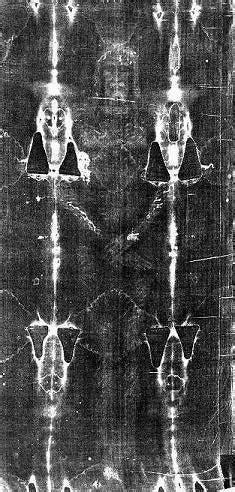
The Shroud dates back at least 700 years and is believed by many to be 2000 years old…the burial cloth of Jesus Christ. The jury is still out—the timing of the shroud’s existence is everything in terms of authenticity—but I must say I’m almost ready to cast my vote.
I’m already a Christian, but have been a skeptic concerning the veracity of the Shroud. And now, reluctantly, I’m becoming a believer. That is, I’m becoming more and more convinced that the imprints of a man’s face and body on these linen burial cloths are indeed those of Jesus.
I will make a cursory case for and against in this post and expand the discussion in upcoming stacks. You decide!! For reference, I included a negative image of the Shroud right here.
Why the interest?
I write about history and culture, and this subject certainly qualifies. After all, the world was dramatically changed by the events that transpired around 33AD in Israel. But it was a recent interview that radio and TV commentator Tucker Carlson did with Dr. Jeremiah Johnston on the Shroud that captured my attention.
Dr. Johnston is a well-regarded scholar specializing in ancient history and archaeology, particularly related to Biblical artifacts and early Christianity.
How do we even know that Jesus was wrapped in a burial cloth when He was taken down from the cross and buried?
We must rely on the following scriptures:
John 19:38–40
“After these things Joseph of Arimathea…asked Pilate that he might take away the body of Jesus, and Pilate gave him permission. So he came and took his body. Nicodemus also, who earlier had come to Jesus by night, came bringing a mixture of myrrh and aloes, about seventy-five pounds. So they took the body of Jesus and bound it in linen cloths with spices, as is the burial custom of the Jews.”
Luke 23:53
“Then he took it down and wrapped it in a linen shroud and laid him in a tomb cut in stone, where no one had ever yet been laid.”
John 20:6–7
“Then Simon Peter came, following him, and went into the tomb. He saw the linen cloths lying there, and the face cloth, which had been on Jesus’ head, not lying with the linen cloths but folded up in a place by itself.”
So…can it be that a cosmic, supernatural burst of energy occurred when Jesus rose from this tomb and left the markings of his body on the linen shroud described in the Gospels?
Here’s a summary of some key points from the interview:
-
Johnston argued that the image on the Shroud bears an astonishing correspondence to the Gospel account of Jesus’s crucifixion and burial: the wound locations, blood‑stain patterns, and anatomical details line up with Scripture.
-
He referenced scientific and forensic observations: for example, the image resides only upon the outer fibers of the cloth (to about 2 micrometers), there’s no detectable paint or pigment, and advanced studies do point to an intense burst of energy (i.e., vacuum ultraviolet radiation) as the cause of the image imprint.
-
Johnston cited historical and paleobotanical data: pollen grains associated with Jerusalem and Syria, a Middle Eastern linen weave (herringbone pattern), and a possible origin tracing from Edessa (modern Turkey) through Constantinople and into Europe.
-
The 1988 carbon‑14 test dated the cloth to around 1260–1390 AD, which would suggest it’s medieval in origin—but Johnston argued that the sample used for the test was from a patched section of the cloth, thus casting doubt on that result. (There have been calls for new testing. To date, no new tests have been conducted.)
-
The interview included Johnston’s strong personal views about relics and institutions: he expressed skepticism toward the Roman Catholic Church’s handling of the Shroud and noted his own shift from dismissing the Shroud as a “Catholic relic” to believing in its authenticity.
-
Note: While Johnston offered various lines of supporting evidence, the broader scholarly community remains divided and notes there’s no definitive, universally accepted proof that the Shroud is the actual burial cloth of Jesus.
Does any of this—for or against—impact my faith in the main and plain things described below? No.
But I do find the Shroud question fascinating.
And since I believe in the Gospel accounts that Jesus was crucified, dead, and buried, and…
That He rose in three days and appeared to more than 500+ people, during which time He taught, encouraged, and gave instructions…
And that He ascended to heaven, where he sits at the right hand of God the Father…
Well, honestly, it’s not that big of a leap for me to believe that a linen shroud that recorded the greatest event in human history is…
What Jesus left in the tomb.
More to come, as we look toward the celebrations of Jesus’s birth and the miracle of Easter.
Leave A Comment